Tangkas Komodo Program - PLN UIW NTT
Information about Tangkas Komodo Program in collaboration with PLN UIW NTT
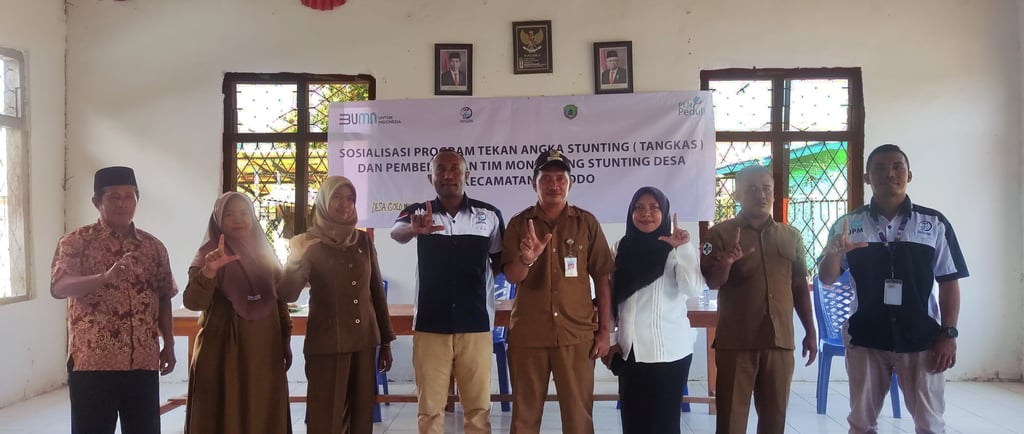
The Stunting Reduction Program (TANGKAS) in Komodo Sub-District is a collaborative initiative between PLN NTT and the Community Care Network (CCN) Foundation / Yayasan Jaringan Peduli Masyarakat (JPM), in partnership with the village governments of Golo Mori and Golo Pongkor in Komodo Sub-District, West Manggarai Regency. The program aims to prevent and address stunting by promoting collaboration between families (both fathers and mothers) and other community components, including health cadres, community leaders, religious leaders, village authorities, and all relevant stakeholders. Its objective is to improve the health status of mothers and children under five by reducing the prevalence of stunting through strengthening family resilience, increasing knowledge on parenting practices and sanitation, improving access to nutritious food, and enhancing the local community’s economy. The program activities focus on several key areas, including diversification of family dietary patterns and nutrition, as well as strengthening farmer family resilience. These efforts begin with program socialization activities aimed at disseminating information about the program to village officials, posyandu cadres, and community leaders. A baseline survey is conducted as an initial assessment to collect essential baseline data. The development of nutrition gardens is carried out to ensure family access to nutritious food, including the distribution of seeds and vegetable seedlings.
Training activities are provided to farming families on the establishment of nutrition gardens, sustainable agriculture practices, soil and water conservation, compost fertilizer production, and diversification of food crops and vegetables. Livestock training is also conducted to improve farmers’ knowledge and skills in animal husbandry.
The program also includes Clean and Healthy Living Behavior (PHBS) campaigns, implemented through community movie screenings featuring national films with health messages, complemented by sanitation kit distribution and prize-based quizzes. An endline survey and joint evaluation with stakeholders are conducted to assess program achievements and impacts.
Further activities focus on improving nutritional status, maternal and adolescent health, and child caregiving practices. This includes the development of Mother Support Groups (KPI), which provide support to mothers on balanced nutrition, child care practices, and PHBS, as well as health public service announcements broadcast via radio. Local nutrition training is also delivered to support the identification and processing of locally sourced foods to improve household nutrition.
Additional components include stunting-focused training for posyandu cadres, provision of food packages for children under five and pregnant women through posyandu services, and the organization of inter-hamlet competitions to promote best practices in food diversification and PHBS. The program further supports the improvement of clean and healthy living practices through increased access to clean water and sanitation, including rehabilitation and upgrading of clean water supply networks. Sanitation training is provided through Community-Based Total Sanitation (STBM) approaches, including training on the construction of low-cost household toilets. Health promotion campaigns are also conducted in schools to raise awareness of sanitation and health among students.
Through these comprehensive and integrated activities, the TANGKAS Program is expected to generate significant positive impacts in reducing stunting rates in Komodo Sub-District by engaging and mobilizing all segments of the community through a holistic and collaborative approach.The Stunting Reduction Program (TANGKAS) in Komodo Sub-District is a collaborative initiative between PLN NTT and the Community Care Network (CCN) Foundation / Yayasan Jaringan Peduli Masyarakat (JPM), in partnership with the village governments of Golo Mori and Golo Pongkor in Komodo Sub-District, West Manggarai Regency. The program aims to prevent and address stunting by promoting collaboration between families (both fathers and mothers) and other community components, including health cadres, community leaders, religious leaders, village authorities, and all relevant stakeholders. Its objective is to improve the health status of mothers and children under five by reducing the prevalence of stunting through strengthening family resilience, increasing knowledge on parenting practices and sanitation, improving access to nutritious food, and enhancing the local community’s economy.
The program activities focus on several key areas, including diversification of family dietary patterns and nutrition, as well as strengthening farmer family resilience. These efforts begin with program socialization activities aimed at disseminating information about the program to village officials, posyandu cadres, and community leaders. A baseline survey is conducted as an initial assessment to collect essential baseline data. The development of nutrition gardens is carried out to ensure family access to nutritious food, including the distribution of seeds and vegetable seedlings.
Training activities are provided to farming families on the establishment of nutrition gardens, sustainable agriculture practices, soil and water conservation, compost fertilizer production, and diversification of food crops and vegetables. Livestock training is also conducted to improve farmers’ knowledge and skills in animal husbandry.
The program also includes Clean and Healthy Living Behavior (PHBS) campaigns, implemented through community movie screenings featuring national films with health messages, complemented by sanitation kit distribution and prize-based quizzes. An endline survey and joint evaluation with stakeholders are conducted to assess program achievements and impacts.
Further activities focus on improving nutritional status, maternal and adolescent health, and child caregiving practices. This includes the development of Mother Support Groups (KPI), which provide support to mothers on balanced nutrition, child care practices, and PHBS, as well as health public service announcements broadcast via radio. Local nutrition training is also delivered to support the identification and processing of locally sourced foods to improve household nutrition.
Additional components include stunting-focused training for posyandu cadres, provision of food packages for children under five and pregnant women through posyandu services, and the organization of inter-hamlet competitions to promote best practices in food diversification and PHBS. The program further supports the improvement of clean and healthy living practices through increased access to clean water and sanitation, including rehabilitation and upgrading of clean water supply networks. Sanitation training is provided through Community-Based Total Sanitation (STBM) approaches, including training on the construction of low-cost household toilets. Health promotion campaigns are also conducted in schools to raise awareness of sanitation and health among students.
Through these comprehensive and integrated activities, the TANGKAS Program is expected to generate significant positive impacts in reducing stunting rates in Komodo Sub-District by engaging and mobilizing all segments of the community through a holistic and collaborative approach.The Stunting Reduction Program (TANGKAS) in Komodo Sub-District is a collaborative initiative between PLN NTT and the Community Care Network (CCN) Foundation / Yayasan Jaringan Peduli Masyarakat (JPM), in partnership with the village governments of Golo Mori and Golo Pongkor in Komodo Sub-District, West Manggarai Regency. The program aims to prevent and address stunting by promoting collaboration between families (both fathers and mothers) and other community components, including health cadres, community leaders, religious leaders, village authorities, and all relevant stakeholders. Its objective is to improve the health status of mothers and children under five by reducing the prevalence of stunting through strengthening family resilience, increasing knowledge on parenting practices and sanitation, improving access to nutritious food, and enhancing the local community’s economy.
The program activities focus on several key areas, including diversification of family dietary patterns and nutrition, as well as strengthening farmer family resilience. These efforts begin with program socialization activities aimed at disseminating information about the program to village officials, posyandu cadres, and community leaders. A baseline survey is conducted as an initial assessment to collect essential baseline data. The development of nutrition gardens is carried out to ensure family access to nutritious food, including the distribution of seeds and vegetable seedlings.
Training activities are provided to farming families on the establishment of nutrition gardens, sustainable agriculture practices, soil and water conservation, compost fertilizer production, and diversification of food crops and vegetables. Livestock training is also conducted to improve farmers’ knowledge and skills in animal husbandry.
The program also includes Clean and Healthy Living Behavior (PHBS) campaigns, implemented through community movie screenings featuring national films with health messages, complemented by sanitation kit distribution and prize-based quizzes. An endline survey and joint evaluation with stakeholders are conducted to assess program achievements and impacts.
Further activities focus on improving nutritional status, maternal and adolescent health, and child caregiving practices. This includes the development of Mother Support Groups (KPI), which provide support to mothers on balanced nutrition, child care practices, and PHBS, as well as health public service announcements broadcast via radio. Local nutrition training is also delivered to support the identification and processing of locally sourced foods to improve household nutrition.
Additional components include stunting-focused training for posyandu cadres, provision of food packages for children under five and pregnant women through posyandu services, and the organization of inter-hamlet competitions to promote best practices in food diversification and PHBS. The program further supports the improvement of clean and healthy living practices through increased access to clean water and sanitation, including rehabilitation and upgrading of clean water supply networks. Sanitation training is provided through Community-Based Total Sanitation (STBM) approaches, including training on the construction of low-cost household toilets. Health promotion campaigns are also conducted in schools to raise awareness of sanitation and health among students.
Through these comprehensive and integrated activities, the TANGKAS Program is expected to generate significant positive impacts in reducing stunting rates in Komodo Sub-District by engaging and mobilizing all segments of the community through a holistic and collaborative approach.The Stunting Reduction Program (TANGKAS) in Komodo Sub-District is a collaborative initiative between PLN NTT and the Community Care Network (CCN) Foundation / Yayasan Jaringan Peduli Masyarakat (JPM), in partnership with the village governments of Golo Mori and Golo Pongkor in Komodo Sub-District, West Manggarai Regency. The program aims to prevent and address stunting by promoting collaboration between families (both fathers and mothers) and other community components, including health cadres, community leaders, religious leaders, village authorities, and all relevant stakeholders. Its objective is to improve the health status of mothers and children under five by reducing the prevalence of stunting through strengthening family resilience, increasing knowledge on parenting practices and sanitation, improving access to nutritious food, and enhancing the local community’s economy.
The program activities focus on several key areas, including diversification of family dietary patterns and nutrition, as well as strengthening farmer family resilience. These efforts begin with program socialization activities aimed at disseminating information about the program to village officials, posyandu cadres, and community leaders. A baseline survey is conducted as an initial assessment to collect essential baseline data. The development of nutrition gardens is carried out to ensure family access to nutritious food, including the distribution of seeds and vegetable seedlings.
Training activities are provided to farming families on the establishment of nutrition gardens, sustainable agriculture practices, soil and water conservation, compost fertilizer production, and diversification of food crops and vegetables. Livestock training is also conducted to improve farmers’ knowledge and skills in animal husbandry.
The program also includes Clean and Healthy Living Behavior (PHBS) campaigns, implemented through community movie screenings featuring national films with health messages, complemented by sanitation kit distribution and prize-based quizzes. An endline survey and joint evaluation with stakeholders are conducted to assess program achievements and impacts.
Further activities focus on improving nutritional status, maternal and adolescent health, and child caregiving practices. This includes the development of Mother Support Groups (KPI), which provide support to mothers on balanced nutrition, child care practices, and PHBS, as well as health public service announcements broadcast via radio. Local nutrition training is also delivered to support the identification and processing of locally sourced foods to improve household nutrition.
Additional components include stunting-focused training for posyandu cadres, provision of food packages for children under five and pregnant women through posyandu services, and the organization of inter-hamlet competitions to promote best practices in food diversification and PHBS. The program further supports the improvement of clean and healthy living practices through increased access to clean water and sanitation, including rehabilitation and upgrading of clean water supply networks. Sanitation training is provided through Community-Based Total Sanitation (STBM) approaches, including training on the construction of low-cost household toilets. Health promotion campaigns are also conducted in schools to raise awareness of sanitation and health among students.
Through these comprehensive and integrated activities, the TANGKAS Program is expected to generate significant positive impacts in reducing stunting rates in Komodo Sub-District by engaging and mobilizing all segments of the community through a holistic and collaborative approach.The Stunting Reduction Program (TANGKAS) in Komodo Sub-District is a collaborative initiative between PLN NTT and the Community Care Network (CCN) Foundation / Yayasan Jaringan Peduli Masyarakat (JPM), in partnership with the village governments of Golo Mori and Golo Pongkor in Komodo Sub-District, West Manggarai Regency. The program aims to prevent and address stunting by promoting collaboration between families (both fathers and mothers) and other community components, including health cadres, community leaders, religious leaders, village authorities, and all relevant stakeholders. Its objective is to improve the health status of mothers and children under five by reducing the prevalence of stunting through strengthening family resilience, increasing knowledge on parenting practices and sanitation, improving access to nutritious food, and enhancing the local community’s economy.
The program activities focus on several key areas, including diversification of family dietary patterns and nutrition, as well as strengthening farmer family resilience. These efforts begin with program socialization activities aimed at disseminating information about the program to village officials, posyandu cadres, and community leaders. A baseline survey is conducted as an initial assessment to collect essential baseline data. The development of nutrition gardens is carried out to ensure family access to nutritious food, including the distribution of seeds and vegetable seedlings.
Training activities are provided to farming families on the establishment of nutrition gardens, sustainable agriculture practices, soil and water conservation, compost fertilizer production, and diversification of food crops and vegetables. Livestock training is also conducted to improve farmers’ knowledge and skills in animal husbandry.
The program also includes Clean and Healthy Living Behavior (PHBS) campaigns, implemented through community movie screenings featuring national films with health messages, complemented by sanitation kit distribution and prize-based quizzes. An endline survey and joint evaluation with stakeholders are conducted to assess program achievements and impacts. Further activities focus on improving nutritional status, maternal and adolescent health, and child caregiving practices. This includes the development of Mother Support Groups (KPI), which provide support to mothers on balanced nutrition, child care practices, and PHBS, as well as health public service announcements broadcast via radio. Local nutrition training is also delivered to support the identification and processing of locally sourced foods to improve household nutrition. Additional components include stunting-focused training for posyandu cadres, provision of food packages for children under five and pregnant women through posyandu services, and the organization of inter-hamlet competitions to promote best practices in food diversification and PHBS. The program further supports the improvement of clean and healthy living practices through increased access to clean water and sanitation, including rehabilitation and upgrading of clean water supply networks. Sanitation training is provided through Community-Based Total Sanitation (STBM) approaches, including training on the construction of low-cost household toilets. Health promotion campaigns are also conducted in schools to raise awareness of sanitation and health among students. Through these comprehensive and integrated activities, the TANGKAS Program is expected to generate significant positive impacts in reducing stunting rates in Komodo Sub-District by engaging and mobilizing all segments of the community through a holistic and collaborative approach.v
Office Address
Jalan TDM V RT 004/RW 001, Kelurahan Oebufu, Kecamatan Oebobo, Kota Kupang, Nusa Tenggara Timur, Indonesia
Contact
+6282235371803
yayasanjpmid@gmail.com
© 2024 Community Care Network. All rights reserved. Made with ❤️ in Indonesia.